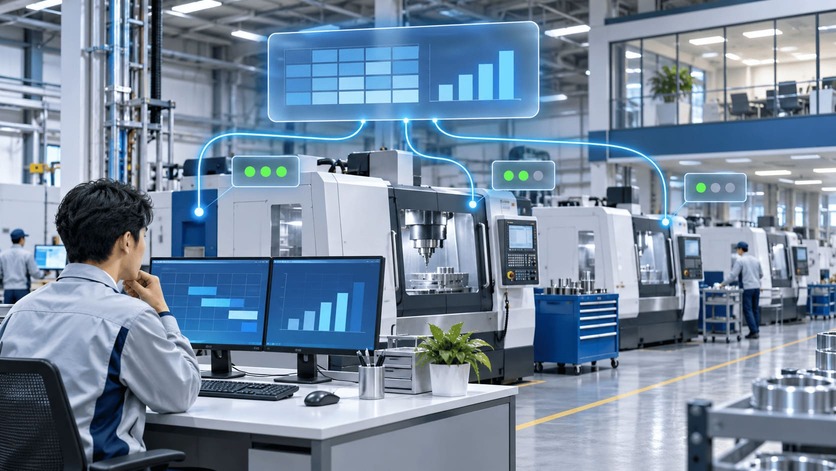
MES (Manufacturing Execution System) is a system that enables manufacturers to monitor production activities in real time and centrally manage information related to production processes, quality, and inventory.
Manufacturing companies face various challenges, including managing production records using Excel or paper-based processes, fragmented equipment data, and inefficient information sharing between production stages.
MES helps digitalize manufacturing operations, improve productivity, maintain consistent product quality, and strengthen traceability across the production process.
This article explains how MES works, the differences between MES and ERP, its five key functions, and the essential steps for successful MES implementation.
1. What Is MES? Understanding How a Manufacturing Execution System Works
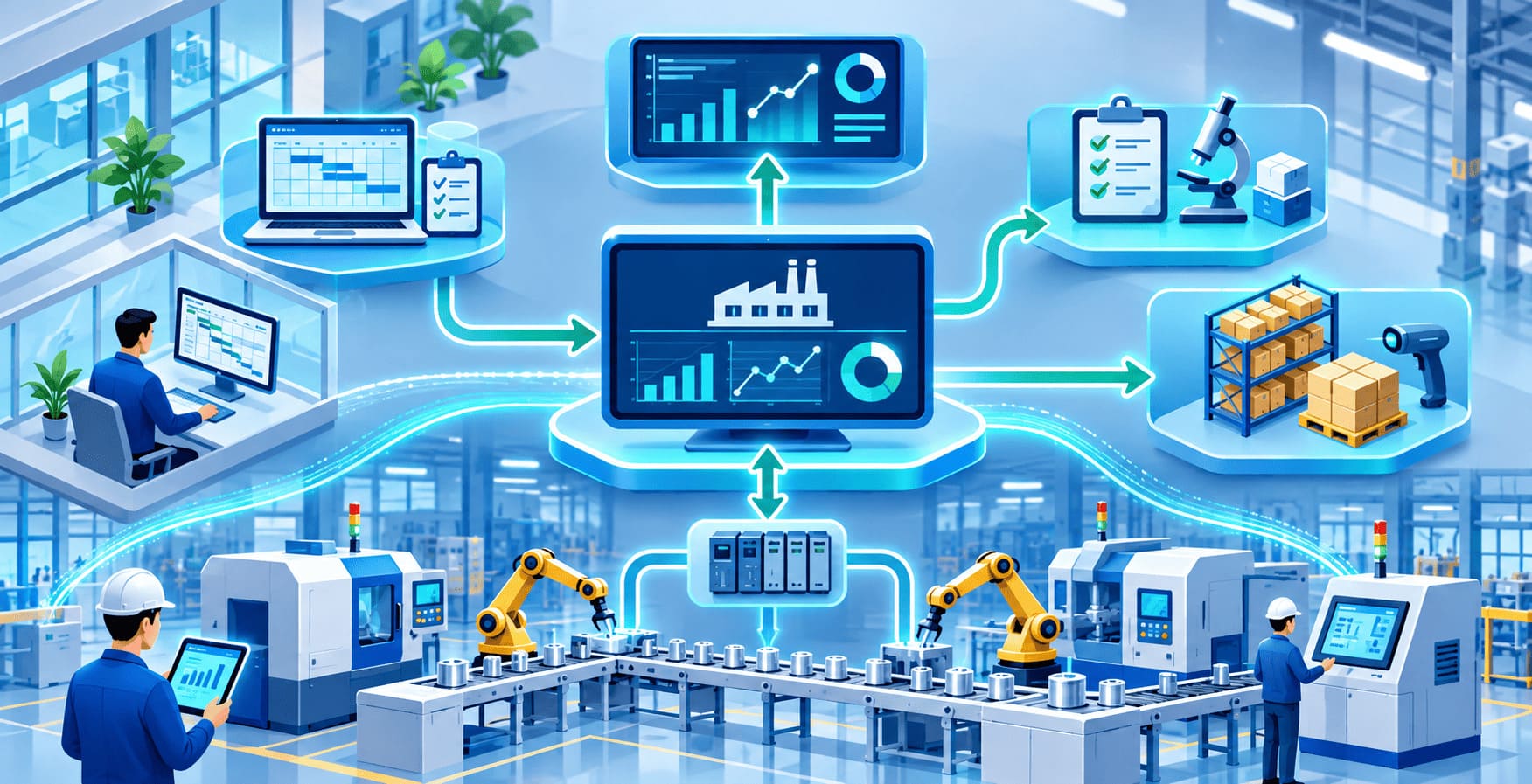
MES (Manufacturing Execution System) is a system designed to support manufacturing operations, from issuing work instructions based on production plans to collecting production data, managing quality, and monitoring production progress.
It centralizes data collected from manufacturing equipment, operators, and management systems, providing greater visibility into shop-floor operations.
For example, by monitoring production line performance, output quantities, and defective products, production managers can identify potential issues earlier and respond more efficiently.
MES also connects business management with manufacturing operations through integration with ERP systems and industrial control systems.
MES vs. ERP: What Is the Difference?
ERP (Enterprise Resource Planning) is a system that manages company-wide resources and business processes, including sales, purchasing, accounting, and inventory.
In contrast, MES focuses on executing and managing production activities on the factory floor.
While ERP manages production plans and material information, MES supports shop-floor work instructions, production execution, and actual production data collection.
By integrating these two systems, manufacturers can connect production planning with actual manufacturing results.
This integration helps improve production visibility and maintain more accurate, consistent inventory information.
2. The 5 Key Functions of MES
MES provides a wide range of functions that support manufacturing efficiency, product quality, and operational transparency.
Below are five essential MES functions commonly used in manufacturing environments.
① Production Management and Process Monitoring
MES manages production plans and actual production results while providing visibility into the progress of each manufacturing process.
By recording operation start and end times, production quantities, and equipment operating conditions, manufacturers can identify production delays and potential bottlenecks.
② Quality Management and Defect Reduction
MES records quality inspection results and defect information generated during manufacturing operations, enabling centralized quality management.
By analyzing inspection histories and abnormal conditions, manufacturers can identify potential causes of defects and implement preventive measures to reduce recurring quality issues.
③ Inventory and Work-in-Progress Management
MES helps manage the quantities and locations of raw materials, work-in-progress (WIP), and finished products.
By recording inventory movements between production stages, manufacturers can improve inventory visibility and reduce the risks of excess stock and material shortages.
④ Manufacturing Traceability
MES manages production history by linking product lot numbers, raw materials, manufacturing processes, and inspection results.
When a quality issue occurs, manufacturers can trace affected products and production records, supporting root-cause investigations and identification of the potential impact.
⑤ Production Data Analytics and Equipment Monitoring
MES collects and consolidates production data, including production output, equipment utilization, defect rates, and manufacturing yield.
This information can be visualized through dashboards, allowing manufacturers to identify operational challenges based on measurable data.
As a result, manufacturing teams can make more informed decisions and support continuous improvement initiatives.
3. Key Benefits of MES Implementation
Implementing MES goes beyond simply digitalizing manufacturing data.
By integrating shop-floor information, MES helps manufacturers improve operational efficiency and make faster, data-driven decisions.
Real-Time Production Visibility
MES provides visibility into production results and process progress, allowing managers to monitor factory operations more efficiently.
This helps production teams identify delays, abnormal conditions, and operational issues without relying entirely on manual reporting.
Reduced Excel and Paper-Based Management
Digitalizing manual data recording and reporting processes can reduce administrative workloads and minimize errors caused by repetitive data entry.
MES also helps standardize production information, making it easier for different departments to access consistent manufacturing data.
Improved Quality Control and Traceability
By linking manufacturing histories with quality inspection data, MES supports faster investigations when production or quality issues arise.
This also helps manufacturers strengthen quality management processes and implement more effective improvement measures.
Data-Driven Production Improvement
By analyzing equipment performance and actual production results, manufacturers can identify processes that require improvement.
MES supports continuous improvement by providing reliable information for evaluating manufacturing performance.
4. MES Implementation Guide: 5 Essential Steps
Successful MES implementation requires a clear understanding of manufacturing operations and a structured approach to system development.
Rather than digitalizing every process at once, manufacturers should prioritize their operational challenges and implement the system in manageable stages.
STEP 1: Analyze Current Operations and Identify Challenges
The first step is to review existing manufacturing workflows, including production management, quality control, and inventory operations.
Manufacturers should identify challenges such as Excel-based management, paper records, duplicate data entry, and inefficient information sharing between departments.
This analysis helps establish a clear understanding of current operations and areas requiring improvement.
STEP 2: Define Implementation Objectives and System Requirements
The next step is to establish clear MES implementation objectives.
These may include improving productivity, enhancing quality control, strengthening traceability, or reducing manual administrative work.
Based on these objectives, manufacturers can define the necessary system functions, management data, and production processes to be covered.
STEP 3: Design the MES and Integrate Existing Systems
The MES should be designed to match the factory’s actual manufacturing workflows and operational requirements.
Depending on the existing IT environment, integration with ERP systems, PLCs (Programmable Logic Controllers), and equipment data collection systems may be required.
Proper system integration helps reduce duplicate data entry and enables information sharing between manufacturing operations and business management systems.
STEP 4: Conduct Pilot Implementation and Evaluate Results
Before deploying MES across the entire factory, manufacturers can introduce the system to selected production lines or processes.
During this phase, they should evaluate system usability, data accuracy, and the effectiveness of operational improvements.
Based on the results, necessary adjustments can be made before expanding the implementation.
STEP 5: Deploy the System and Continuously Improve Operations
After validating the pilot implementation, MES can be gradually expanded to additional production processes or the entire factory.
Following deployment, manufacturers should continue analyzing production data and identifying opportunities for operational improvement.
Regular system reviews and enhancements can help ensure MES continues to support evolving manufacturing requirements.
5. BAP’s MES and Manufacturing DX Solutions
BAP supports manufacturing companies in Japan and Vietnam through MES development and manufacturing digital transformation (DX) solutions.
Our development approach focuses on each factory’s operational workflows, manufacturing processes, and existing equipment environment.
BAP designs and develops flexible solutions covering production management, quality control, inventory management, manufacturing traceability, and other essential factory operations.
We also support integration with existing ERP systems and manufacturing equipment, helping manufacturers centralize fragmented data and improve operational visibility.
MES Integration Project for a Beverage Manufacturing Factory
BAP participated in the development of an integrated manufacturing management solution for a beverage factory in Vietnam.
The project involved integrating multiple systems, including MES, Laboratory Information Management System (LIMS), Computerized Maintenance Management System (CMMS), ERP, and Business Intelligence (BI).
The solution was designed to centralize manufacturing information, improve production visibility, and support more efficient factory operations.
By connecting manufacturing processes with related business systems, the project established a foundation for more integrated production data management.
MES Development Support for a Steel Pipe Manufacturing Factory
BAP also conducted business process analysis and system design for an MES development initiative at a Japanese steel pipe manufacturer operating in Vietnam.
The project focused on integrating production results, work-in-progress inventory, quality inspection records, and manufacturing traceability information.
The proposed system aims to improve visibility across manufacturing processes and support centralized production data management.
By considering the factory’s actual production workflows, BAP developed a system design approach tailored to the operational requirements of steel pipe manufacturing.
6. Conclusion: Accelerating Manufacturing DX with MES
MES is a manufacturing execution system that centralizes production, quality, and inventory information to support more efficient manufacturing operations.
By implementing MES, manufacturers can improve production visibility, strengthen quality management, enhance traceability, and enable continuous improvement through data-driven decision-making.
However, successful MES implementation requires more than introducing new software.
Manufacturers should first identify their operational challenges, define clear objectives, and gradually implement the functions that deliver the greatest value.
BAP supports manufacturing digital transformation through business process analysis, system design, software development, and integration with existing enterprise systems and manufacturing equipment.
Looking to implement MES or accelerate digital transformation in your factory? Contact BAP to discuss your manufacturing challenges and explore the right solution for your operations.
Explore BAP’s Software Development Solutions